I. Origin and Historical Evolution
The origin of the auspicious cloud pattern lies in the ancient Chinese worship of clouds, as clouds bring rain and were crucial to agricultural civilization. Its development has a clear timeline:
Neolithic Age: Simplified cloud-like vortex patterns appeared on painted pottery of Hemudu and Majiayao cultures, as early imitations of natural clouds.
Shang & Zhou Dynasties: Cloud-and-thunder patterns (angular spiral lines) prevailed on bronze vessels, serving ritual functions to communicate between heaven and earth.
Qin & Han Dynasties: Cloud-motif patterns and scroll clouds matured, with smooth, flowing lines, often paired with dragons, phoenixes and immortals, reflecting the idea of transcendence.
Sui & Tang Dynasties: Elegant and magnificent, represented by flying apsaras and clouds in Dunhuang murals; round cloud patterns became mainstream, integrating Buddhist art elements.
Song & Yuan Dynasties: More elegant and realistic; ruyi-shaped clouds and four-combined clouds emerged, widely used on porcelain and paintings. Ming & Qing Dynasties: Highly decorative; cloud-and-dragon patterns symbolized imperial power, with complex and full shapes applied in furniture, jade and clothing.
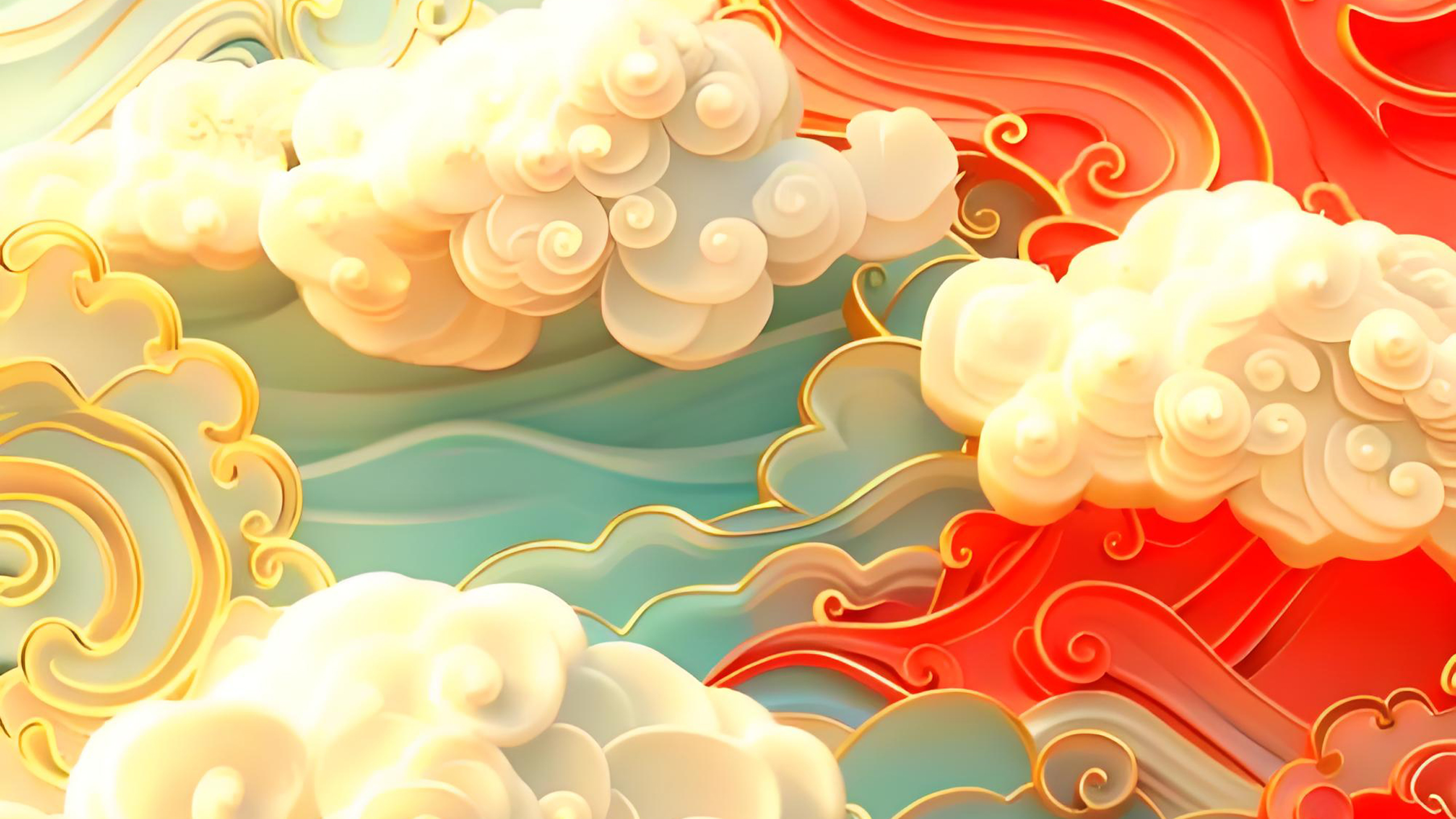
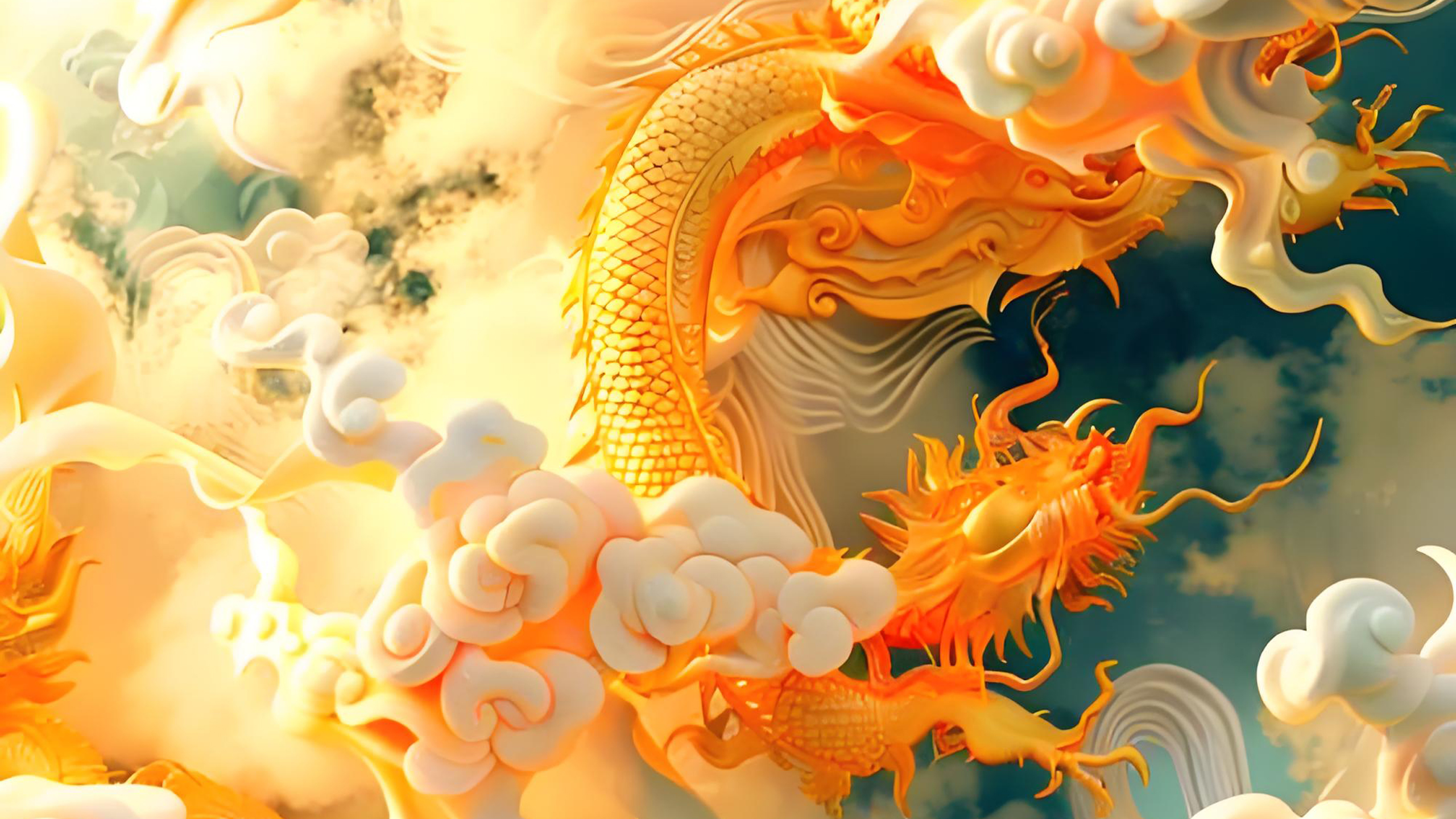
Modern Times: The 2008 Beijing Olympic torch made auspicious clouds a globally recognized symbol of Chinese culture.
II. Main Pattern Types
Cloud-and-thunder pattern: Classic of Shang and Zhou, straight lines and angular folds, simple and solemn.
Scroll cloud / Cloud-motif pattern (Qin & Han): S-shaped curves, light and dynamic.
Round cloud pattern (Sui & Tang): Plump cloud heads, light tails, often in groups.
Ruyi cloud pattern: Cloud heads shaped like a ruyi scepter or lingzhi mushroom, symbolizing good fortune.
Four-combined cloud pattern: Four symmetric clouds, representing harmony in all directions.
Layered cloud pattern (Yuan, Ming & Qing): Multi-layered, rich and magnificent.
Cultural Meaning and Philosophy
Core auspiciousness: Auspicious clouds represent blessing, harmony, good harvest and peace.
Career success: Phrases like “rising high in the sky” compare clouds to promotion and success.
Religion & philosophy: In Taoism, clouds are mounts for immortals, representing immortality; in Buddhism, they symbolize transcendence. They also embody the philosophy of harmony between man and nature.
Social status: In the imperial court, cloud-and-dragon patterns represented divine imperial power.
Cultural Meaning and Philosophy
IV. Traditional Applications
Architecture: Paintings, caissons and roof decorations in the Forbidden City and temples.
Clothing: Embroidered robes, official uniforms, and festive costumes for weddings and birthdays.
Artifacts: Porcelain, jade, lacquerware, cloisonné and carved furniture.
Art: Traditional Chinese painting, paper-cutting, shadow puppetry and brocade.
V. Modern Innovative Applications
Cultural and creative products (jewelry, stationery, home decor).
Brand logos and packaging design to highlight Oriental charm.
Film, TV and game art design.
VI. Artistic Features
Auspicious cloud patterns are defined by flowing lines, balanced density, and stylized beauty. Colors often include blue, red and gold, combining elegance and splendor.